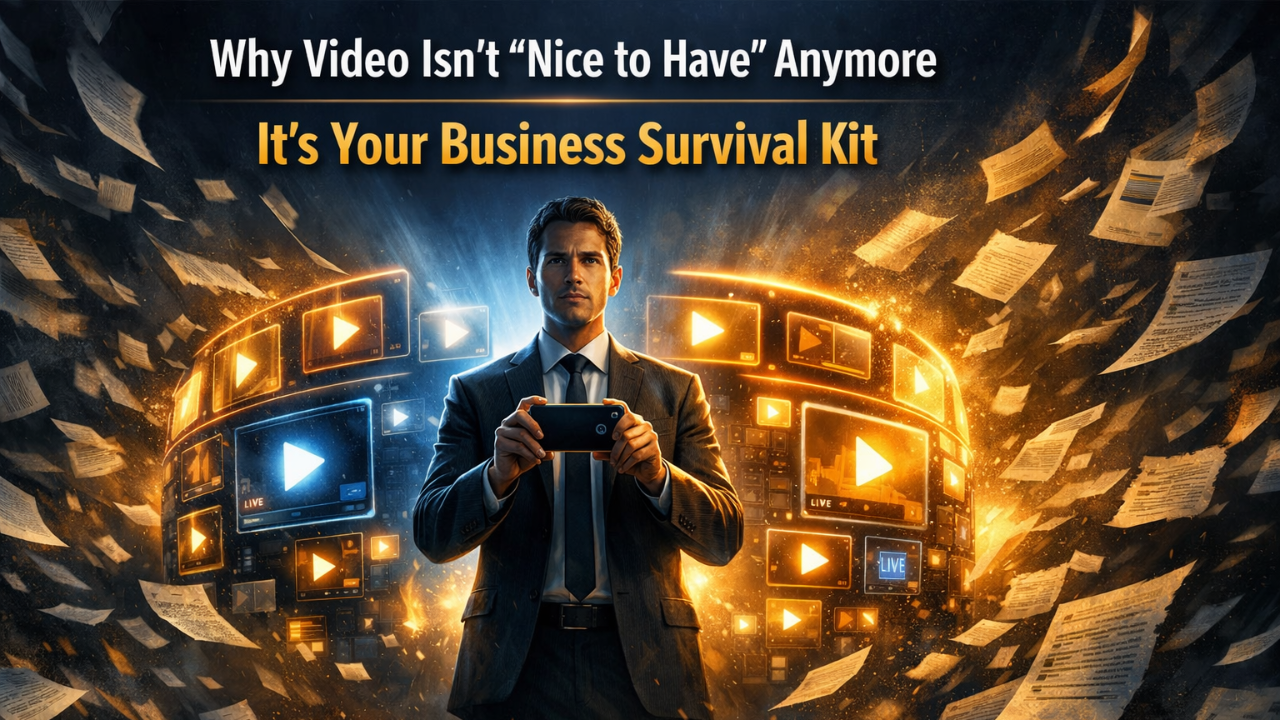
Why Video Isn't "Nice to Have" Anymore—It's Your Business Survival Kit
I was speaking at a conference in Florida last month, and a business owner asked: "Frank, video seems like such a big investment. We're doing fine with just written content. Why should we bother?"
I asked him: "How many of your competitors are using video?" He paused. "Most of them, actually." Exactly.
Here's what I've learned training businesses across 70+ countries:
Video isn't the future anymore. It's the present. And if you're still treating it like an optional extra, you're handing your competitors a megaphone while you're whispering into a tin can.
The numbers tell the story: 91% of businesses now use video as a marketing tool, and 85% of people have been convinced to buy a product or service by watching a video.
That's not theory. That's your revenue walking out the door if you're not in the game.
The £10,000 Mistake Nobody Talks About

Here's where I need to save you from an expensive blunder I see constantly.
You spend money creating a brilliant video. You upload it ...
LinkedIn in 2026 - The Game Has Changed

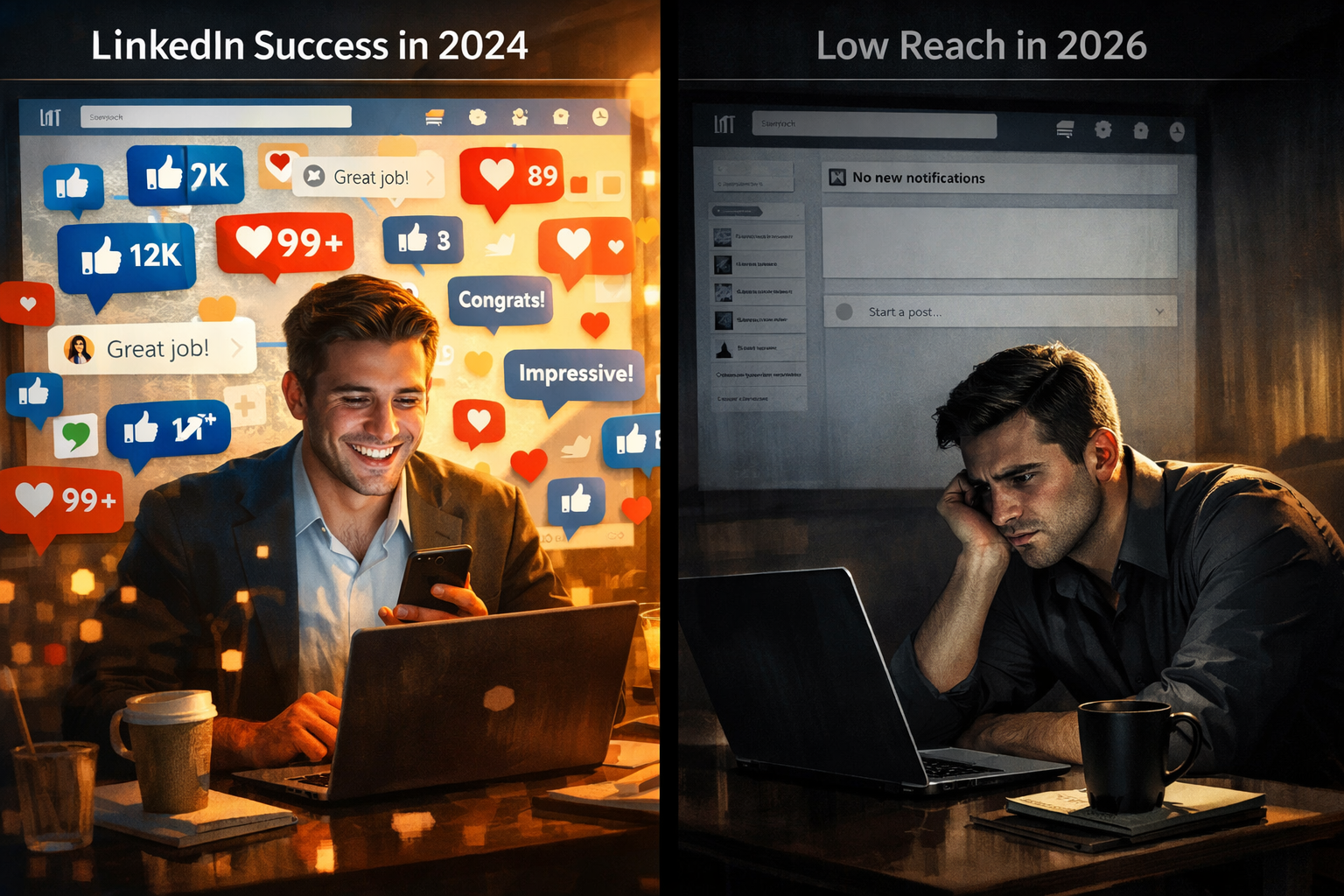
I was chatting with a marketing director in Manchester last week who was genuinely baffled. "Frank," she said, "my LinkedIn posts used to get thousands of views. Same content quality, same posting schedule. Now? Crickets. What the hell happened?"
I pulled up her last ten posts. Every single one had a link in the main text. There was her problem.
LinkedIn fundamentally changed the rules in 2026, and most people are still playing by the 2024 playbook. Having trained professionals across 70+ countries on LinkedIn strategy, I can tell you this with absolute certainty: What worked 18 months ago will actively hurt you today.
The Three Seismic Shifts
External links are poison. Posts with links see 60% less reach. I tested this myself—same post, same timing. The version without the link got 4x more impressions.
Comments beat likes. A post with 50 genuine comments outperforms one with 500 likes. LinkedIn wants conversations, not superficial engagement.
Engagement pods are dead. The algo...
How AI Can Transform Your Speaking Business (But Your Stage Performance Still Determines Everything)

I was sitting in a hotel lobby in Dubai last month, scrolling through my calendar for 2026. sixty-three confirmed speaking gigs. Another dozen in negotiation. My fee higher than it's ever been.
And here's what hit me:
Not a single one of those bookings came from cold outreach.
Not one came from a fancy marketing campaign.
Every single booking—every single one—came because someone saw me speak, or knew someone who saw me speak.
After 25 years on the professional speaking circuit across 70+ countries, I can tell you the uncomfortable truth: 95% of my bookings come from someone in the audience seeing me deliver.
The other 5%? They came from people who watched my showreel and thought, "That's exactly what we need."
Your stage performance is your real marketing. Everything else—your website, your AI prospecting, your social media presence—exists to get you on more stages where more people can see you work.
But here's where it gets interesting.
AI is fundamentally changing how speak...
The New World of Sales: 7 Trends Reshaping How Buyers Buy (and Sellers Win)

I had a conversation last month in Amsterdam with a sales director who'd been in the industry for 20 years.
"Frank," he said, looking genuinely bewildered, "I used to know exactly how to close a deal. Now I don't even know when the bloody deal starts."
I laughed. Then I realised he wasn't joking.
Welcome to the new world of sales, where everything you learned in 2015 is about as useful as a Rolodex. (Yes, I'm old enough to remember those.)
Look, the fundamentals haven't changed—people still buy from people they trust, relationships still matter, value still wins. I've been training sales teams across 70+ countries for a quarter-century, and those truths are eternal.
But how those fundamentals play out? That's shifting faster than a politician's promises.
The sales professionals absolutely crushing it right now aren't the ones with the slickest pitch decks or the biggest LinkedIn networks. They're the ones who've adapted to how buyers actually behave in 2026—not how sellers wish t...
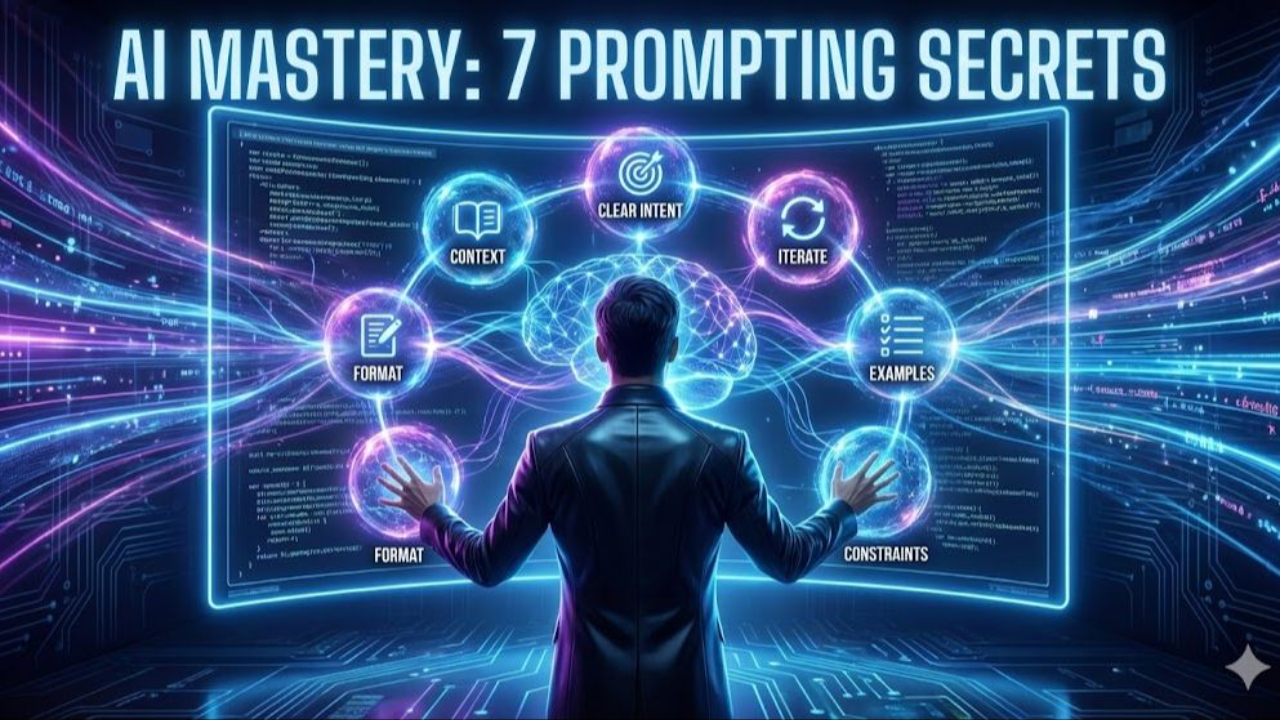
7 Prompting Secrets That Will Transform How You Use AI
Stop Getting Terrible Results and Start Getting Genius-Level Output
Here's what happens at nearly every conference where I speak about AI:
Someone raises their hand: "I tried ChatGPT and it gave me absolute rubbish. AI just doesn't work for my industry."
Then I ask to see their prompt.
Nine times out of ten, it's something like: "Write me a blog post about leadership."
The problem isn't AI. The problem is they're speaking to a genius like it's a mind reader.
I've spent three years testing AI tools across dozens of business scenarios—from sales proposals in Japan to keynote development in Dubai. The difference between mediocre AI output and genuinely brilliant results comes down to how you ask the question.
1) Give AI a Role (And Watch the Magic Happen)
Most people start with "Write me..." That's like walking into a party and immediately asking someone for a favour.
Instead, tell AI who it should be.
Weak: "Write an email to a difficult client."
Strong: "You are an experienc...
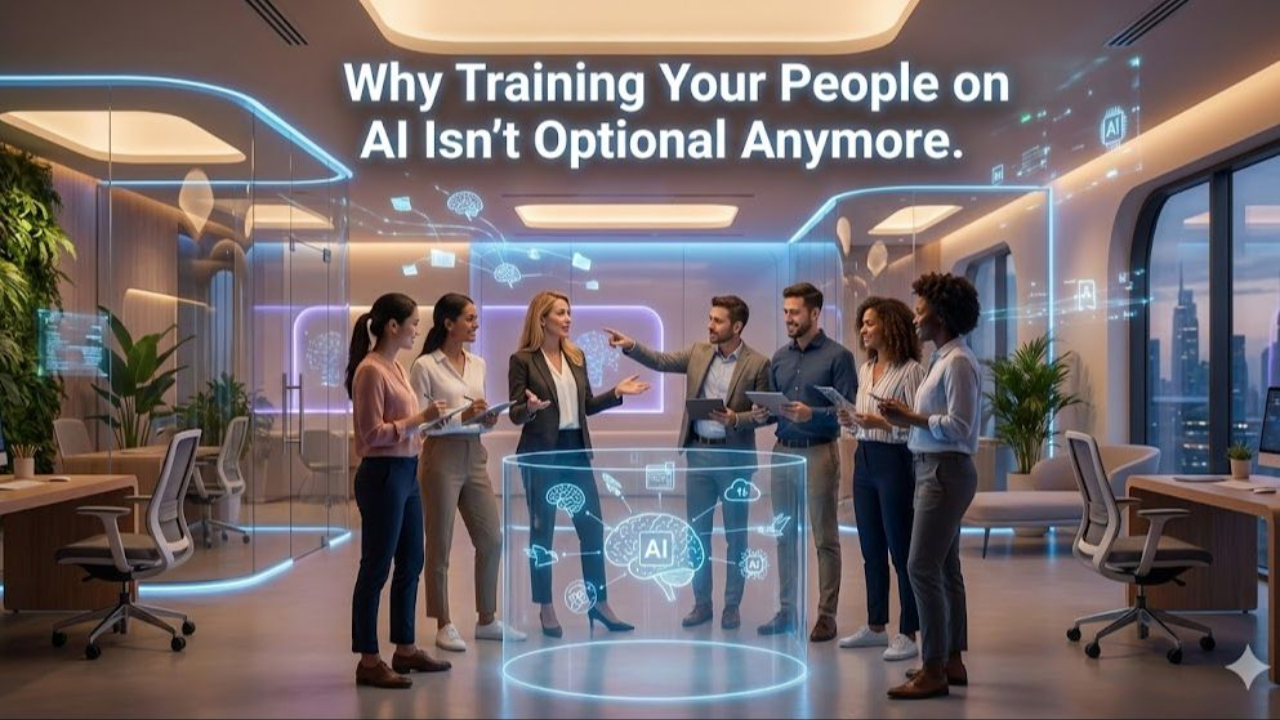
Why Training Your People on AI Isn't Optional Anymore (And What Happens If You Don't)
Let me ask you something: When was the last time your company rolled out new software and just assumed everyone would figure it out on their own?
Exactly. You wouldn't dream of it.
Yet that's precisely what most businesses are doing with AI right now. They're giving employees access to ChatGPT or whatever flavour-of-the-month they've subscribed to, then wondering why adoption is patchy and results are underwhelming.
I've trained teams in over 70 countries, and I can tell you this with absolute certainty: Access without training is just expensive confusion.
The businesses winning right now aren't the ones with the best AI tools. They're the ones whose people actually know how to use them properly.
1) The £50,000 Question Nobody's Asking

Three months ago in London, I had this conversation with a CEO of a 200-person firm:
Him: "We've given everyone AI tools. Cost us £50,000 a year. Usage is terrible."
Me: "How much did you spend training them?"
Him: (long pause) "We sent an em...
Why AI-Enabled Financial Advisors Will Win the Next Decade

Here's something that might surprise you: The financial advisors thriving in 2035 won't be the ones with the fanciest degrees or the biggest client lists today. They'll be the ones who figured out how to dance with AI rather than run from it.
I've been watching this transformation unfold from conference stages in Florida to training rooms in Manchester, and the writing's on the wall.
Financial advisors who embrace AI aren't just getting a competitive edge—they're redefining what "advisory" actually means.
Let me explain why the smart money (literally) is on AI-enabled advisors.
1) The Time Liberation Revolution
Traditional financial advisors spend roughly 70% of their time on administrative tasks. Portfolio rebalancing, compliance documentation, client onboarding, market research—all the stuff that keeps you busy but doesn't make clients' lives better.
AI flips this equation.
I met a financial advisor in Dubai last year who told me his AI tools saved him 15 hours a week. That'...
Sales Managers: Stop Managing, Start Leading

(And Why Most of You Are Doing It Spectacularly Wrong)
I was in Singapore last month when a sales manager named David said something brutally honest: "Frank, I spend my entire day firefighting, attending pipeline reviews, and updating forecasts for my boss. When exactly am I supposed to manage my team?"
The room went silent. Then everyone started nodding.
Here's the uncomfortable truth: Most sales managers aren't managing.
They're glorified administrators with fancier titles and higher blood pressure.
The numbers prove it.
Only 28% of sales reps hit their annual quota — the lowest in six years.
Meanwhile, 70% of B2B reps missed quota in 2024. That's not a rep problem. That's a management problem.
The £100,000 Mistake: Managing Activities Instead of Coaching Outcomes
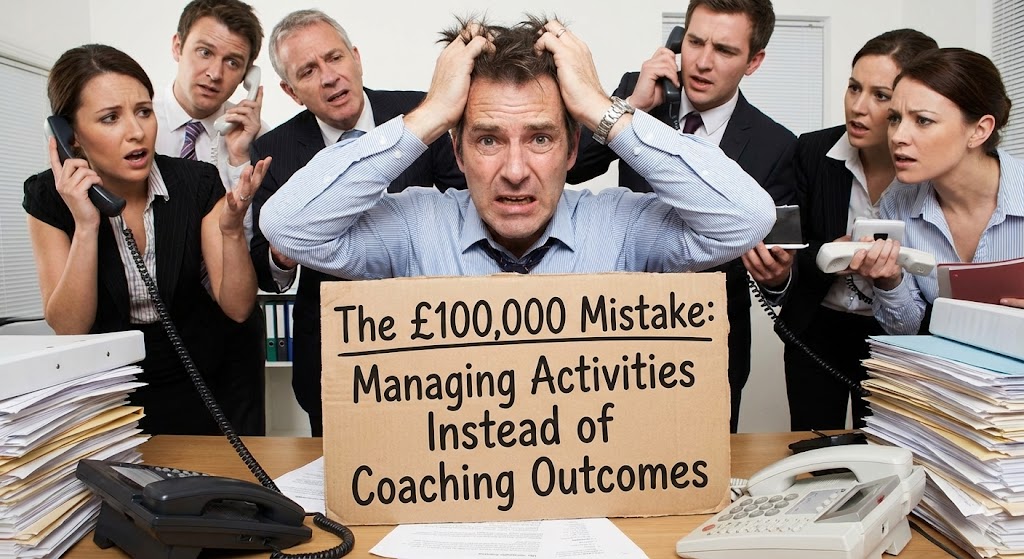
Here's the biggest mistake: Managers track calls made, meetings booked, emails sent.
All measurable.
All documented.
All utterly meaningless if your reps don't know how to actually sell.
Two-thirds of salespe...
Why Most Sales Training Is a Complete Waste of Money


(And How to Fix It Before Your Best People Leave)
I was sitting in a hotel conference room in Brussels watching a sales trainer deliver what he clearly thought was brilliant content.
PowerPoint slides from what looked like 2012.
Generic techniques that could apply to selling anything from software to sandwiches.
Role-plays that made everyone squirm.
The sales team sat there politely, checking their phones under the table, probably wondering if the coffee break would ever arrive.
At the break, one of the sales managers pulled me aside. "We paid £10,000 for this," he said quietly. "Three months from now, nobody will remember a single thing."
He was absolutely right. And he's not remotely alone.
Here's a statistic that should terrify every business owner: 84% of sales training content is forgotten within three months.
Even worse, approximately 70% of salespeople lack formal training entirely.
So businesses either don't train their people at all, or they waste money on training...
